
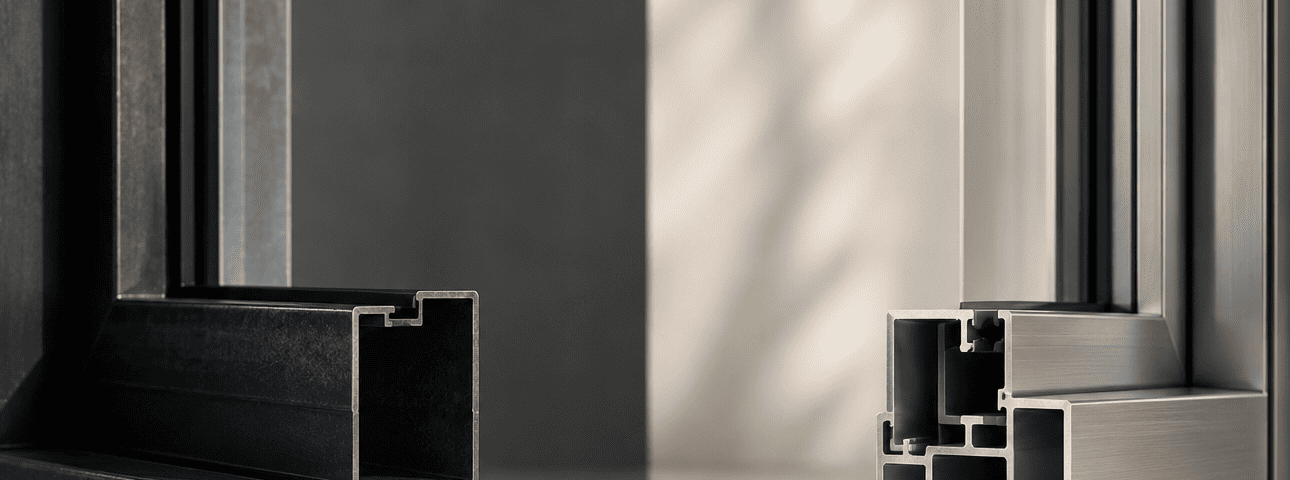
When to Use Steel vs Aluminium in Metal Joinery: Key Factors for Choosing the Right Material
In architecture and construction, the choice of materials directly influences the performance and durability of a project. In the world of metal joinery, two materials stand out above the rest: steel and aluminium.
Both offer significant technical and aesthetic advantages, but each is better suited to specific requirements. Choosing correctly between steel or aluminium joinery can make a substantial difference in aspects such as structural strength, insulation, maintenance, and even architectural design.
At Mabelux, we have been working with the bending of aluminium and steel profiles for architectural, construction, and industrial projects for more than 35 years. This experience has given us an in-depth understanding of the behaviour of both materials and allowed us to collaborate with systems from leading brands such as Jansen, Forster Systems, Technal, Cortizo, and Strugal.
So, when should you choose steel, and when is aluminium the better option? Let’s take a closer look.
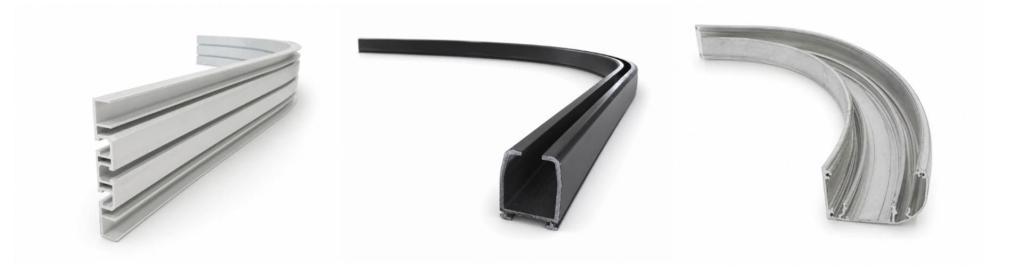
Steel and Aluminium: Two Materials with Very Different Characteristics
Although both materials are widely used in metal joinery, their properties differ significantly, making each one more suitable depending on the type of project.
Steel: Maximum Strength and Structural Robustness
Steel is one of the strongest materials used in construction and architecture. Its high structural capacity makes it possible to manufacture slimmer profiles capable of supporting heavy loads.
This makes it an ideal solution for:
- Large-scale projects.
- Façades and curtain walls.
- High-security enclosures.
- Structures subjected to significant stresses.
- Fire-rated (RF) and bullet-resistant systems.
In addition, steel offers an aesthetic highly valued in contemporary and industrial architecture, especially in projects where minimalist profiles and elegant lines are desired.
At Mabelux, we regularly work with steel systems from brands such as Jansen and Forster Systems, which are widely used in high-level technical and architectural projects.
Aluminium: Lightweight, Versatile, and Efficient
Aluminium stands out primarily for its light weight and versatility. It is easy to handle and highly resistant to corrosion.
Aluminium joinery is particularly suitable for:
- Windows and doors.
- Lightweight façades.
- Balustrades and handrails.
- Large-format enclosures.
- Projects where weight is a key factor.
Furthermore, aluminium allows for a wide range of finishes, powder coatings, and anodised treatments, significantly expanding aesthetic possibilities.
Systems from brands such as Technal, Cortizo, Aluminios Barcelona, Reynaers Aluminium, and Strugal offer aluminium profiles capable of combining design, energy efficiency, and advanced technical performance.
When to Choose Steel in Metal Joinery
Steel is often the best choice when a project requires high structural performance or demanding technical specifications.
Large Spans and Complex Structures
Thanks to its high mechanical strength, steel makes it possible to cover large dimensions using slimmer profiles.
This is essential for:
- Glazed façades.
- Curved curtain walls.
- Metal roofing systems.
- Unique architectural structures.
In projects involving curved shapes or complex radii, steel bending provides exceptional stability and precision.
Safety and Protection
Steel is indispensable in applications requiring:
- fire resistance,
- bullet protection,
- enhanced security,
- or high impact resistance.
Fire-rated and security steel profiles are commonly used in airports, public buildings, infrastructure projects, and industrial facilities.
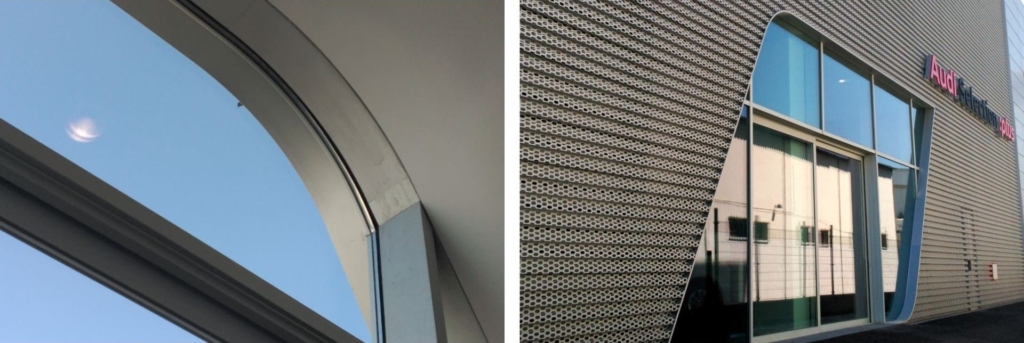
When to Choose Aluminium in Joinery
Aluminium is an extremely versatile and efficient solution for projects where lightweight construction, energy efficiency, and ease of maintenance are priorities.
Efficient Windows and Enclosures
Modern aluminium joinery offers excellent thermal and acoustic performance, particularly when incorporating thermal break technology. As a result, it is one of the most widely used solutions in residential buildings, hotels, offices, and sustainable developments.
In addition, aluminium makes it possible to manufacture curved windows and customised systems with great precision.
Projects Where Weight Matters
Aluminium weighs considerably less than steel. This offers important advantages in:
- building renovations,
- lightweight façades,
- suspended structures,
- and projects where reducing structural loads is a priority.
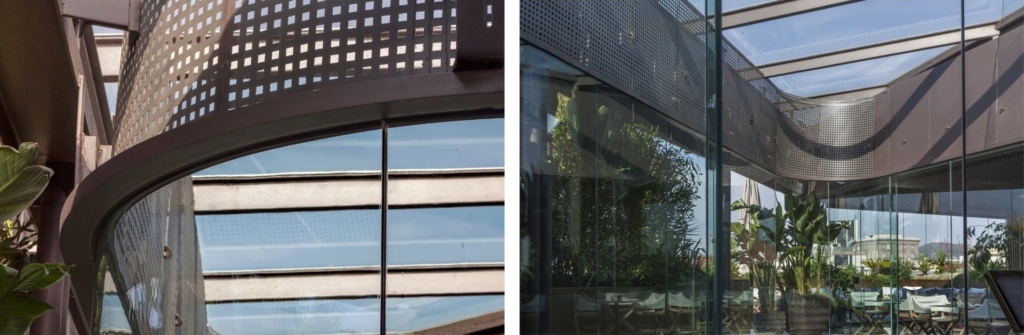
Which Material Is Better for Curved Profiles?
Both steel and aluminium deliver excellent bending results, but each material performs better depending on the application.
Steel Bending: Precision and Stability
Steel is ideal for:
- complex structures
- large radii
- high-strength applications,
- and projects where structural stability is a priority.
Its rigidity allows very precise tolerances to be maintained, even in large-scale components.
Aluminium Bending: Flexibility and Lightweight Performance
Aluminium stands out for its ability to adapt to more fluid and organic designs.
It is widely used in:
- curved façades,
- balustrades,
- round windows,
- urban furniture,
- and customised architectural elements.
Thanks to modern aluminium profile bending technologies, it is possible to achieve complex radii while maintaining high-quality finishes, even on powder-coated or anodised profiles.
Steel and Aluminium: A Choice That Depends on the Project
There is no universally superior material. The choice between steel and aluminium always depends on factors such as:
- Structural requirements
- Architectural design
- Budget
- Climate and environmental conditions
In many projects, both materials are even combined to take advantage of the strengths of each.
That is why it is essential to work with a technical team capable of analysing each case and recommending the most appropriate solution.
Mabelux: Expertise in Steel and Aluminium Bending for Unique Projects
Modern metal joinery demands increasingly technical, efficient, and customised solutions. Both steel and aluminium offer enormous possibilities, but making the right choice is essential to guarantee the performance and durability of every project.
At Mabelux, we help turn that decision into real, precise solutions tailored to every requirement.
